
Contact Lens Exams, Fittings, & Brands in Lincoln
Contact Lenses You Can Feel Comfortable In
Contact lenses are small, clear plastic disks inserted directly into the eye and worn to correct vision. They are designed to sit on top of the tear film that keeps the eyes lubricated.
Contact lenses are an alternative to eyeglasses that can provide added functionality to a person with refractive errors. Contact lenses can help to improve vision for people with myopia, hyperopia, astigmatism, and presbyopia.
Contacts for Everyday Wear
There are many different types of contact lenses, including specialty lenses, for the treatment of certain conditions. The most commonly worn contact lenses are soft contact lenses and rigid gas-permeable (RGP) lenses.
Soft lenses are the most commonly worn lenses. They are generally very comfortable because of their soft and flexible design. Choose between daily wear and extended wear lenses:
- Daily wear: these lenses are worn during the day and removed before you go to bed. They are disposable, meaning that you replace them with a new pair every day, every week, or every month – depending on your preferences.
- Extended wear: you can wear these lenses while you sleep.
Rigid gas-permeable lenses can be helpful for people with astigmatism and corneal irregularities such as keratoconus.
Contact Lens Exams
When we perform a contact lens exam, we will assess your overall eye health to ensure contact lenses are right for you. Certain conditions like chronic dry eye and keratoconus may inhibit your ability to wear contact lenses, or require you to wear specialty lenses.
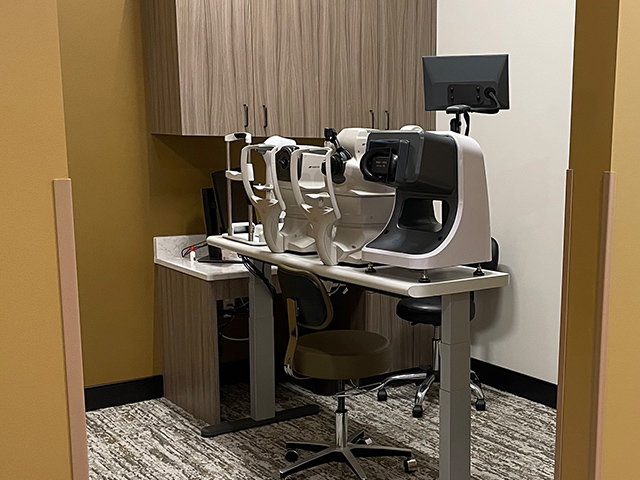
We use a technology called corneal topography to measure the curvature of your cornea. This technology helps us to identify any abnormalities before prescribing contact lenses and helps us determine if your current contact lenses are creating any abnormalities.
Corneal topography works in a way similar to the way you would characterize a mountain on a topographic map. If we detect a corneal irregularity, we can help to find the appropriate treatment and suggest which type of specialty contact lenses will work best.












If you’re interested in contact lenses, we’re happy to evaluate your eyes and help you find the right fit. Please give us a call if you have any questions!
Quick Links
Helpful Articles
All Eye Care Services
Find personalized eye care excellence with our comprehensive services. From eye exams to advanced diagnostics, trust us for all your vision needs.
Keep In Touch
For non-urgent questions or to learn more about our services, contact us today!
Quick Links
Our Services
Contact Info
Hours of Operation
- Monday 8 AM – 5 PM
- Tuesday 10 AM – 7 PM
- Wednesday 10 AM – 5 PM
- Thursday 10 AM – 7 PM
- Friday 8 AM – 5 PM
- Saturday Closed
- Sunday Closed
- Monday
- Tuesday
- Wednesday
- Thursday
- Friday
- Saturday
- Sunday
- Monday
- Tuesday
- Wednesday
- Thursday
- Friday
- Saturday
- Sunday
© 2026 Signature Eye Care. All rights Reserved -
Accessibility Statement
-
Privacy Policy
-
Sitemap
Managed and Designed by 