
Diabetic Eye Exams
Putting Your Ocular Health First
Diabetes is a disease that affects the body’s ability to produce insulin to regulate blood glucose levels. High blood glucose levels can damage various parts of the body, including the small blood vessels in the eye.
The Centers for Disease Control and Prevention (CDC) say that around 90% of vision loss from diabetes can be prevented. Regular comprehensive eye exams are paramount to monitoring your vision and catching early signs of disease before they progress, especially for people with diabetes.
Diabetic Eye Disease
Studies have shown that 60% of people with diabetes are not getting the recommended eye examinations they need. Without proper evaluations, diabetes can cause several different eye problems to occur.
Diabetic Retinopathy
Diabetic retinopathy occurs when high blood glucose levels damage the blood vessels in the retina, causing them to swell and leak. Swollen blood vessels can stop blood from passing through the eye, or new abnormal blood vessels can grow on the retina, causing vision loss.
There are 2 main stages of diabetic retinopathy:
- NPDR (Non-Proliferative Diabetic Retinopathy)
- PDR (Proliferative Diabetic Retinopathy)
NPDR is the early stage of diabetic eye disease, which many people with diabetes have. With this stage, the retina swells due to broken blood vessels. The macula may also swell, causing macular edema.
In the early stages of diabetic retinopathy, blood vessels can also inhibit blood flow to the macula, causing what’s called macular ischemia. These symptoms usually cause blurry vision and can lead to significant vision loss if left untreated.
PDR is considered late-stage diabetic retinopathy, as vision can worsen or be lost entirely. This occurs when the retina begins to grow new blood vessels that may break and bleed into the vitreous. New blood vessel growth can also cause scar tissue to form, which may lead to a detached retina.
It is crucial to monitor your vision for changes that may indicate early signs of diabetic retinopathy. Symptoms of diabetic eye disease include:
- An increased amount of floaters
- Blank or dark areas in your vision
- Blurred vision
- Poor night vision
- Faded colors or vision that appears “washed-out”
Testing for Diabetic Retinopathy
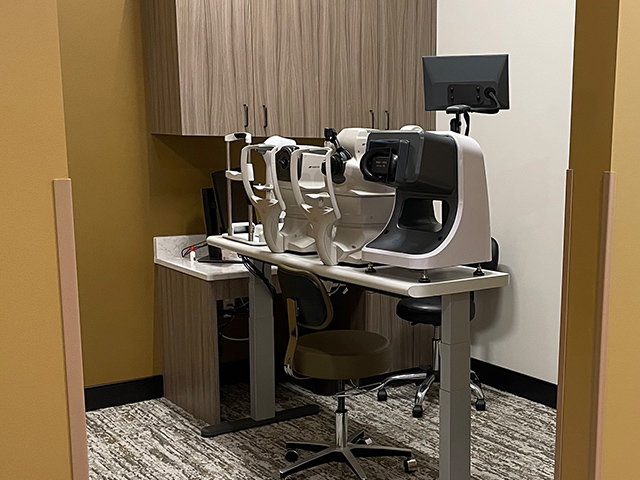
At Signature Eye Care, we use the latest technology in eye care to test and treat various eye conditions. Our diabetic eye exams include the use of Optical coherence tomography (OCT) and fundus photography.
Optical coherence tomography (OCT) is a non-invasive imaging test that is used to take cross-section images of your retina. This allows us to see and measure the thickness of your retina’s layers, which can easily pinpoint areas of swelling.
Before the procedure, we will administer dilating eye drops to widen the pupil and give us a better view of the retina. The scan takes around 5 – 10 minutes and is generally painless, but you may be sensitive to light for several hours afterward.
Fundus photography involves the use of a specialized camera to photograph the back of the eye through a dilated pupil. The photograph produced can show blood vessels, optic nerve, abnormal bleeding, scar tissue, and other signs of eye disease that may need treatment.
The procedure itself is quick and generally painless but, as with pupil dilation, you may feel sensitive to light for a few hours afterward.
If you have diabetes, it is essential to have a comprehensive eye exam performed regularly to catch early signs of diabetic eye disease.
Quick Links
Helpful Articles
All Eye Care Services
Find personalized eye care excellence with our comprehensive services. From eye exams to advanced diagnostics, trust us for all your vision needs.

Keep In Touch
For non-urgent questions or to learn more about our services, contact us today!
Quick Links
Our Services
Contact Info
Hours of Operation
- Monday 8 AM – 5 PM
- Tuesday 10 AM – 7 PM
- Wednesday 10 AM – 5 PM
- Thursday 10 AM – 7 PM
- Friday 8 AM – 5 PM
- Saturday Closed
- Sunday Closed
- Monday
- Tuesday
- Wednesday
- Thursday
- Friday
- Saturday
- Sunday
- Monday
- Tuesday
- Wednesday
- Thursday
- Friday
- Saturday
- Sunday
© 2026 Signature Eye Care. All rights Reserved -
Accessibility Statement
-
Privacy Policy
-
Sitemap
Managed and Designed by 